
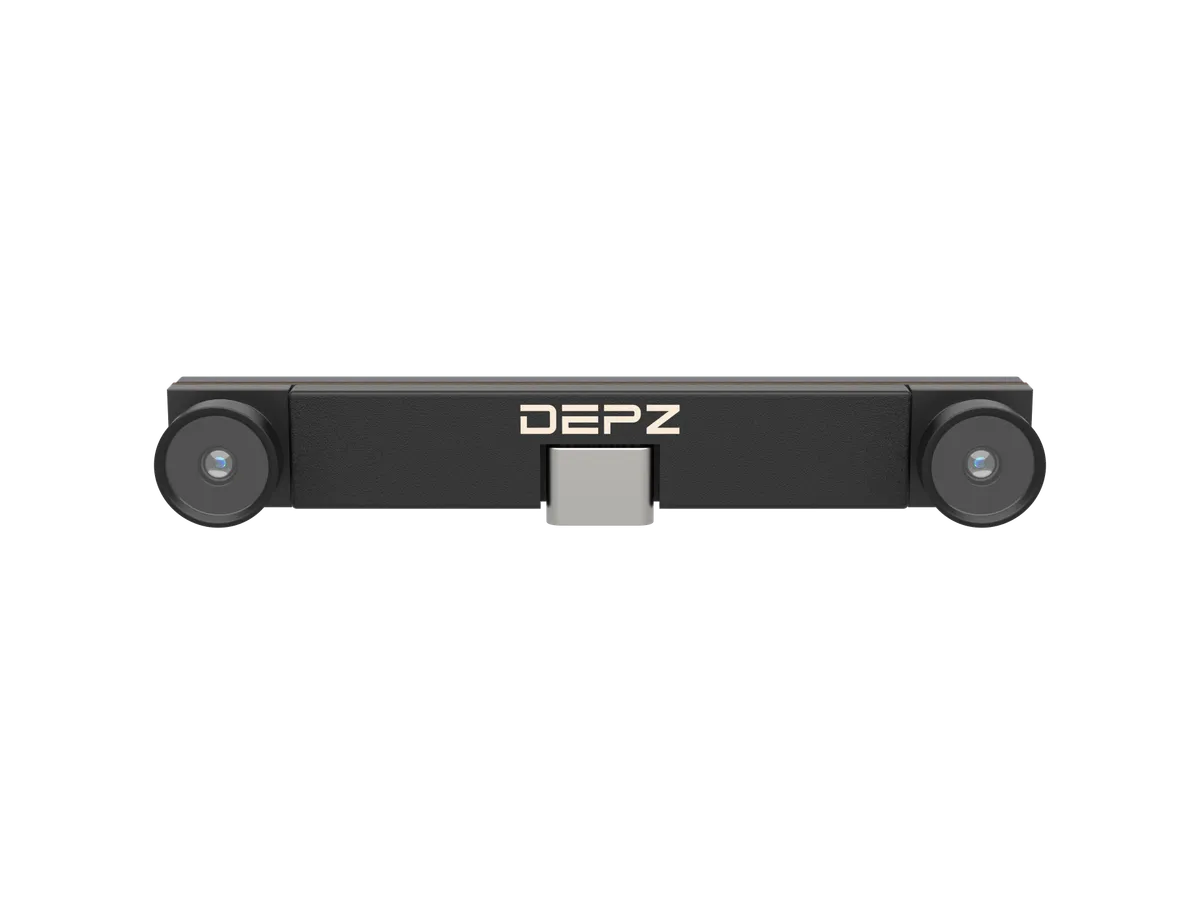
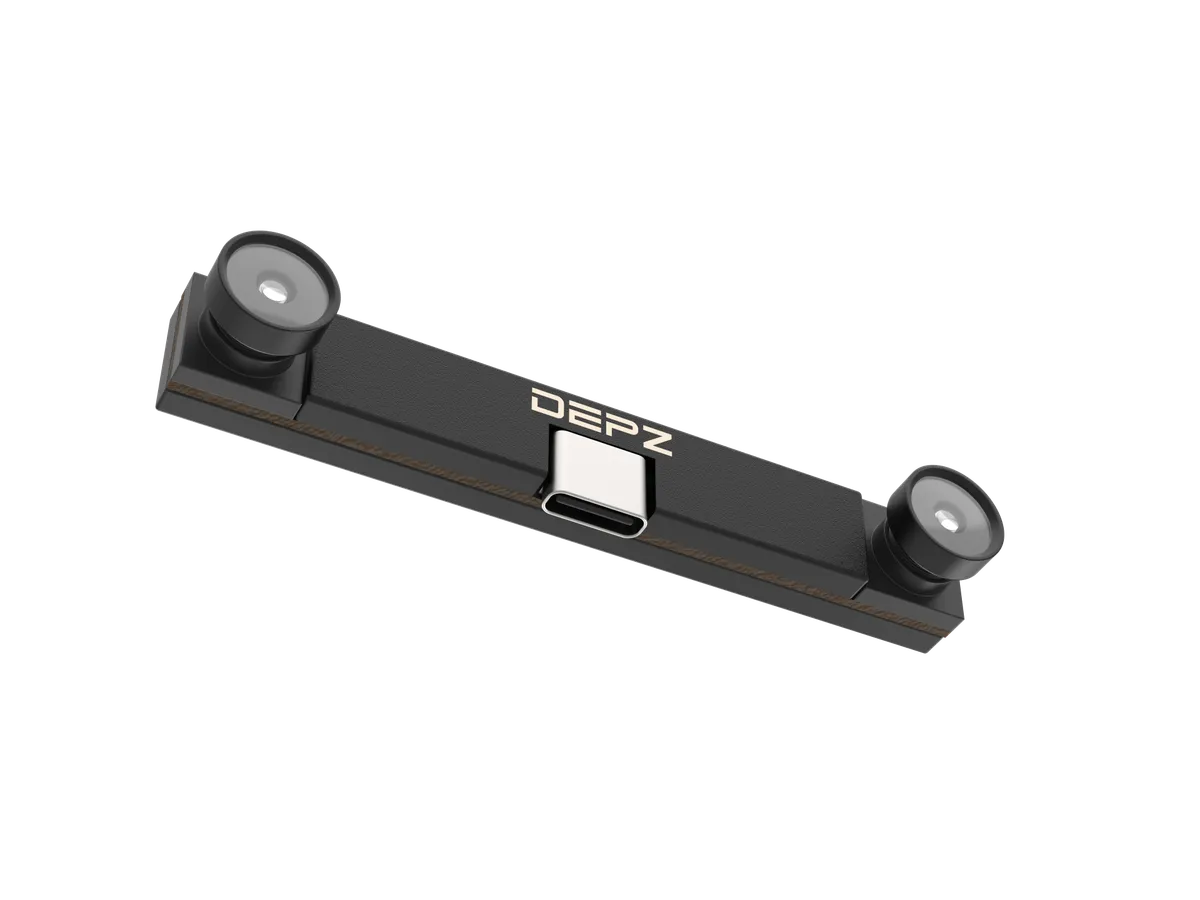
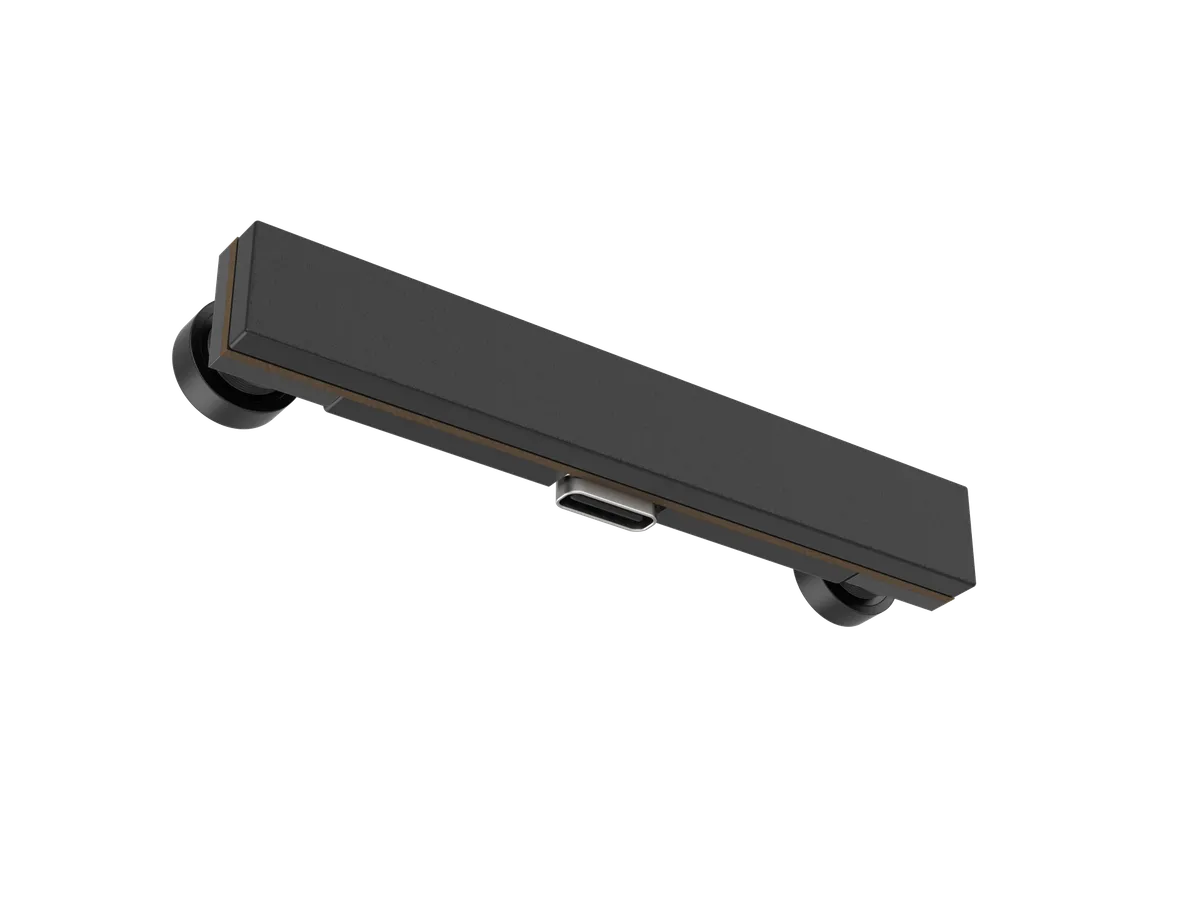
For illustration only. Final appearance depends on options selected.
Stereo Camera
Minima Module
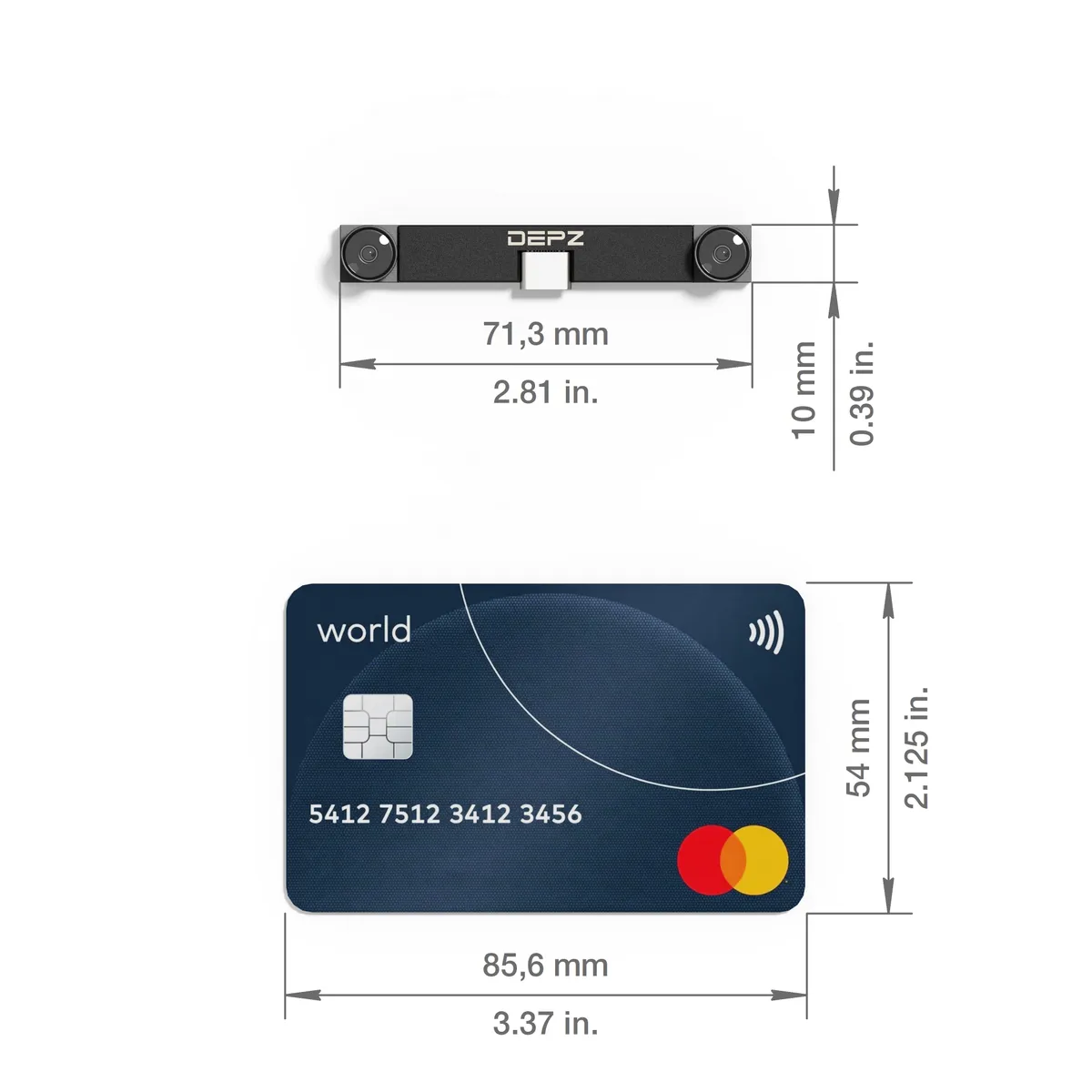
Minima packs a complete RGB stereo depth camera into an 82 × 21 mm body — the bare module is just 71 × 10 mm. A fixed 6 cm baseline and four lenses from 57° to 158° deliver depth from 6 cm out to 8 m. Built for drones, handhelds and compact robots, where every gram and millimeter counts. Depth comes from passive color stereo — nothing is emitted, no IR projector to wash out in daylight, and the depth map is aligned with color by construction. Every unit ships factory-calibrated. It is a standard UVC device over USB: Windows, Linux, macOS, Raspberry Pi or Jetson — at a fraction of the price of comparable depth cameras.
| Full Model Name | Stereo Camera Module Minima Ultra Wide Lenses No Mount v2.1 |
| Ideal Depth Range | 8 cm – 4.6 m |
| RGB Field of View | 95°(H) × 53°(V) × 111°(D) |
| Dimensions | 7.1 cm × 1 cm |
| Max Resolution | 2×1280×720 |
| Max Framerate | 30 fps |
| Sensor | RGB |
| Compatible OS | Windows, Ubuntu, macOS, Raspbian, Jetson Linux, Android, iOS |
| Baseline | 6 cm |
| Focal Length | 2.3 mm |
| Aperture | ƒ/2.5 |
| Sensor Size | 1/4" |
| IR Sensitive | With IR filter |
| Shutter Type | Rolling |
| Multicamera Sync | Software, Linux only |
| Pixel Size | 3 µm |
| Mounting | — |
| Connector Type | Mini USB |
| Power Consumption | 0.5 – 1W |
| Protocol | UVC 1.1 |
| Connectivity | USB 2.0 HS |
| SKU | STEREO-CAMERA-MODULE-MINIMA-ULTRA-WIDE-LENSES-NO-MOUNT-V21 |
| 3D model | |
| Drawing |
USB cable, cable bracket, tripod mount and tripod are not included in the box. Would you like to add them:
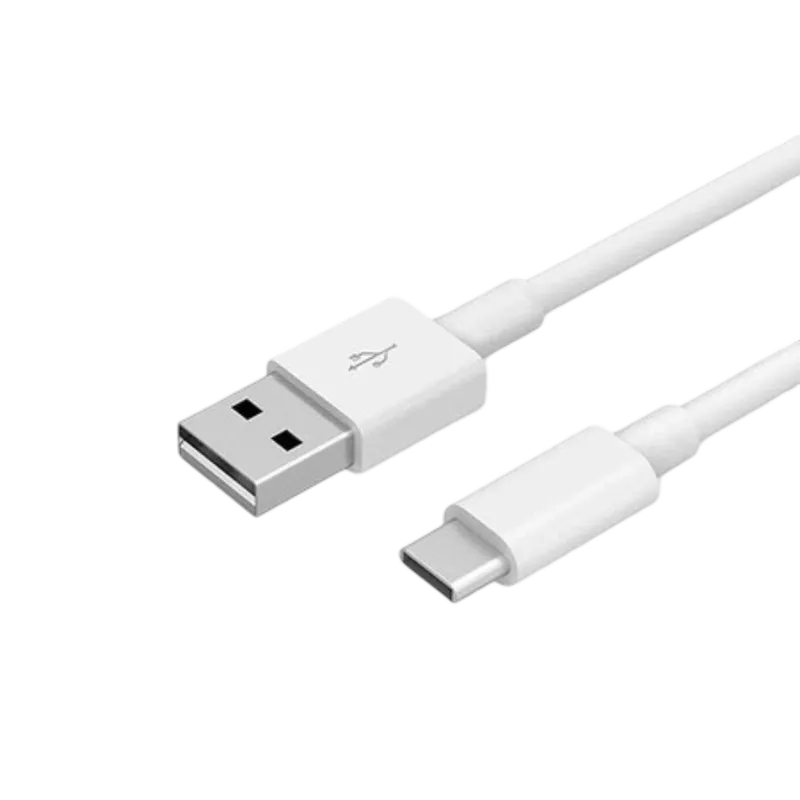
USB-A to USB-C Cable 1m for Minima and Clarity
Every DEPZ camera comes with a full software stack — a plug-and-play desktop app, a developer SDK and complete documentation. Go from unboxing to live depth in minutes, then build whatever you need on top. Read more about our AI-first architecture →
DEPZ Camera Viewer
Plug in and see depth instantly — rectified left/right, depth, disparity and point cloud side by side in real time. Switch models and accelerators on the fly, then record and replay sessions for tuning and calibration. No code, no setup.
Get the Viewer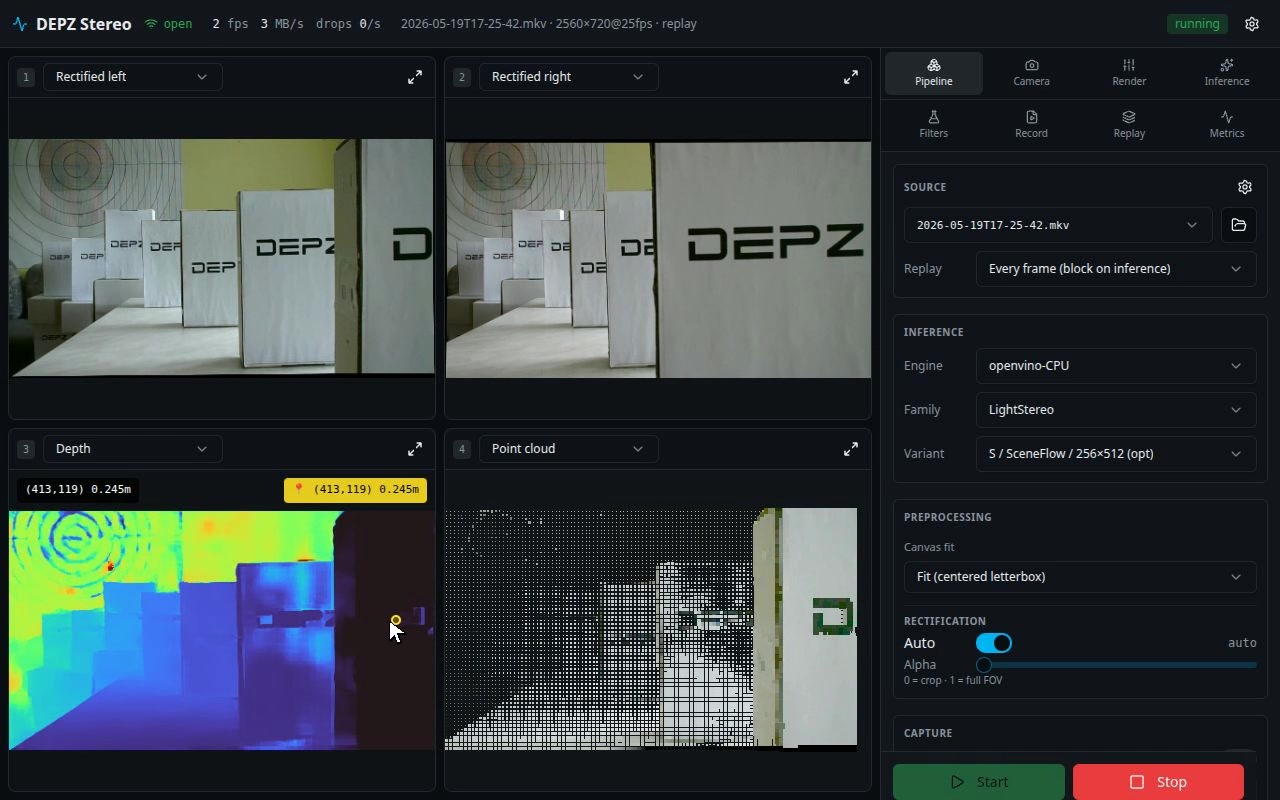
DEPZ Camera SDK
A standalone library for building your own products: calibrated, metric depth, raw disparity and point clouds with full control over the pipeline. Python today; C, C++, Java and Node.js are on the way.
pip install depz-camera-sdkGet the SDK Documentation
Step-by-step guides, tutorials and a complete API reference — everything you need to get productive fast.
Read the docsHands-on example projects built with this hardware — each one a single Python file, ten minutes from plugging in, ending in a number you can check yourself.

Get a depth map from a stereo camera in Python
Connect a DEPZ stereo camera, read a live depth map, and learn what a depth pixel is worth — a real accuracy check: 2.94 m measured vs 2.99 m taped.

Measure the distance between two points with a depth camera
Click two pixels, get metres. Why measuring across the view beats measuring into it — verified against an A4 sheet: 0.297 m.

Detect the floor plane in a point cloud with Python
Turn the depth map into a point cloud, find the floor by plane search, and measure the camera's height to 5 mm — a 34 mm book still reads as an obstacle.

Measure box dimensions with a depth camera in Python
Width, depth and height of a parcel — no markers, no clicking corners. Verified: a 27 × 27 × 25 cm box measured to within 3 mm.

Turn any table into a touchscreen with a depth camera
Detect fingertip touches on an ordinary table: a plane fit that ignores your hand, no temporal smoothing, and 1.4 mm accuracy at an 18 mm threshold.

Zone intrusion detection with a depth camera
Mark a zone on the floor and alarm on anything above it — no person detector, a top-down view, and the camera's 2 % bias measured a second, independent way.

Remove the background by depth — a green screen without the green
Cut the background by distance instead of colour: flying-pixel filtering, a feathered mask, and the measured 5–10 cm cost of a clean edge.